ENC vs ANC: Which Noise Cancellation Do You Need?
The consumer audio technology industry thrives on technical acronyms. Often, these terms confuse buyers who are simply looking for the best audio experience. The ENC vs ANC debate sits at the center of this confusion. To actually understand the difference, you need to look past the marketing language and get into what these technologies are physically doing.
Quick Summary: ANC vs. ENC
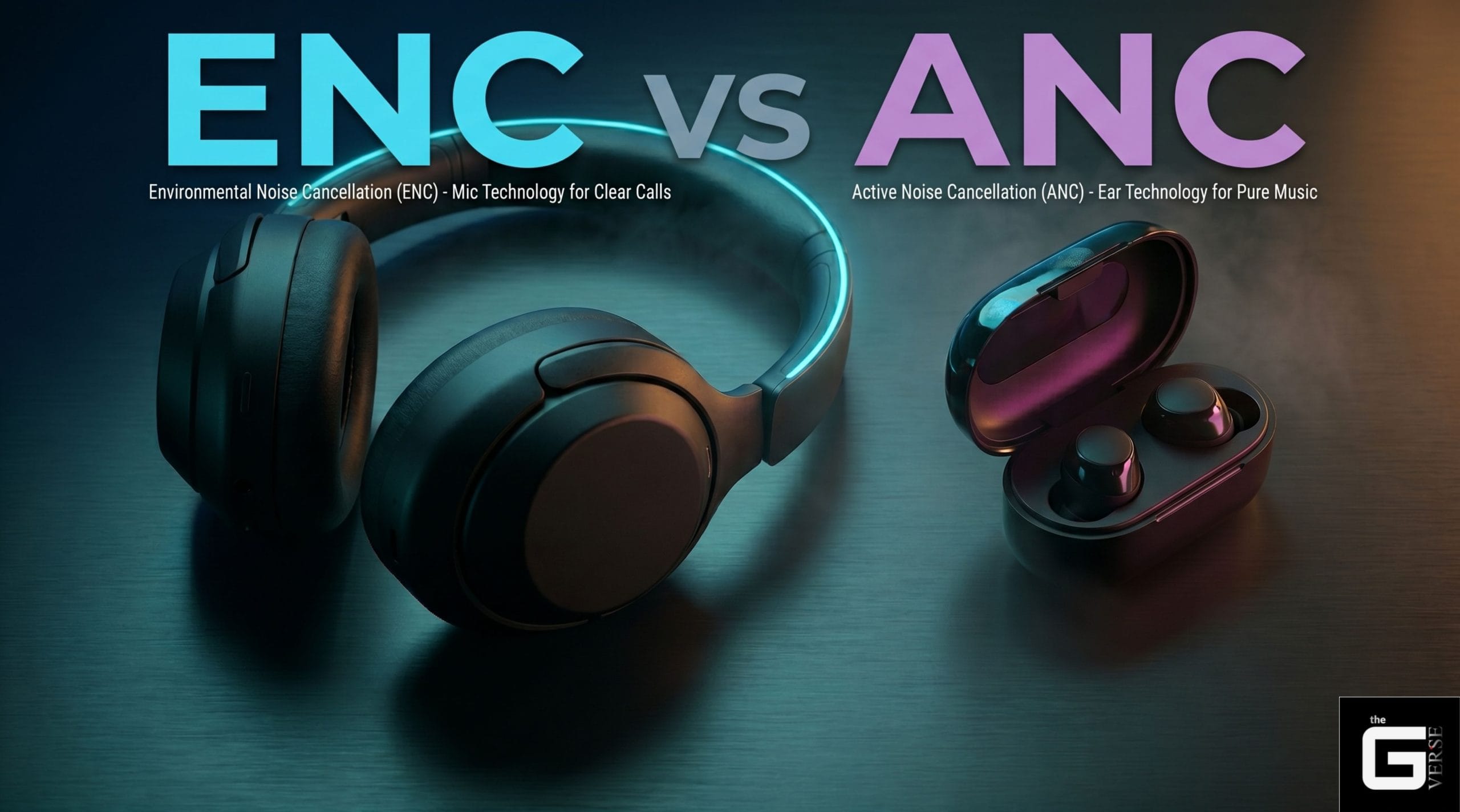
- Active Noise Cancellation (ANC): Designed for you (the listener). It uses internal and external microphones to create phase-inverted anti-noise waves that block out background sounds like airplane engines or office chatter.
- Environmental Noise Cancellation (ENC): Designed for the person on the other end of your call. It uses multi-microphone arrays and spatial filtering algorithms to isolate your voice and block out background noise during calls or video conferences.
| Feature Category | Active Noise Cancellation (ANC) | Environmental Noise Cancellation (ENC) |
| Primary Beneficiary | The individual wearing the audio device | The recipient on the other end of the line |
| Target Acoustic Signal | Incoming environmental ambient noise | Outgoing transmitted human speech |
| Hardware Execution | Internal/External mics + Phase inversion | Multi-microphone arrays (Spatial beamforming) |
| Optimal Frequency Range | Low-frequency continuous drones (engines/HVAC) | High-frequency spatial filtering (voices/clatter) |
| Battery Impact | High (14% – 20% reduction in capacity) | Negligible background drain |
| Best Use Case | Commuting, air travel, deep focus | Zoom meetings, gaming comms, phone calls |
What is Noise Cancellation? Understanding the Acoustic Basics
Acoustic noise reduction is fundamentally divided into two scientific disciplines: passive physical isolation and active digital processing. Before diving into the specifics, it helps to understand the two fundamentally different ways noise cancellation works: physical blocking and active digital processing. Passive Noise Cancellation remains the only method recognized by stringent occupational safety standards (OSHA) for preventing permanent hearing damage.
Passive isolation relies entirely on high-density acoustic materials to create a physical barrier. Dense memory foam ear tips or heavily clamped leather ear cups seal the auditory pathway, blocking acoustic energy from entering the ear canal. This analogue methodology requires zero electrical power and stands as the best defense against sudden high-frequency transients in audio playback devices, Bluetooth earphones, and Bluetooth earbuds.
Conversely, active digital systems utilize lithium-ion battery power and advanced microprocessors to monitor the surrounding environment. These noise-cancellation technologies target low-frequency wavelengths before they reach the human eardrum. The anc vs enc distinction only materializes when hardware engineers attempt to solve both incoming listener comfort and outgoing communication clarity simultaneously.
What Does ANC Stand For? The Science of Anti-Noise
ANC is built on a single physics principle: destructive interference. Active Noise Cancellation is an electro-acoustic system that deliberately generates an inverse anti-noise wave to cancel out unwanted ambient background noise.
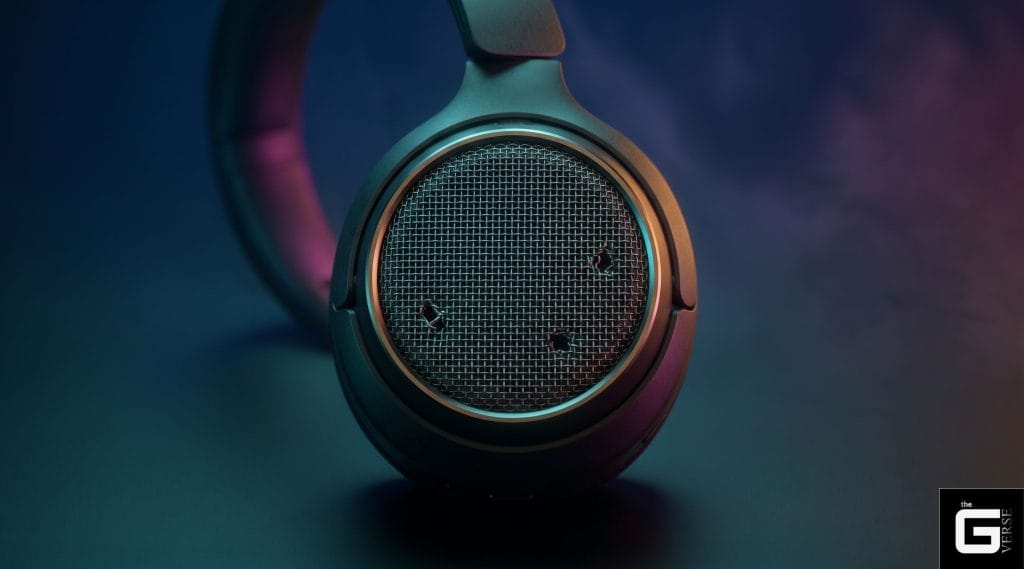
This entire mechanism relies on the precise mathematical execution of destructive interference. When an external microphone handles noise detection for a low-frequency hum, the internal DSP calculates the exact amplitude and temporal frequency of that incoming wave.
The headphone amplifier then drives the headset speakers to produce an identical waveform that is phase-shifted by exactly 180 degrees. When the original noise and the synthesized anti-noise collide in the physical space of the ear cup, the resulting air pressure fluctuations mathematically sum to zero.
The underlying ANC technology is governed strictly by the following physical equations:
Original Ambient Noise Waveform: y(noise) = A sin(ωt)
Synthesized Anti-Noise Waveform: y(anti) = A sin(ωt + π)
Destructive Interference Result: y(resultant) = A sin(ωt) + A sin(ωt + π) = 0
Executing this sound cancellation in real-time requires the implementation of the Filtered-x Least Mean Squares (FxLMS) algorithm. Because the FxLMS digital algorithms continuously update digital filter weights, they minimize the residual error signal detected inside the ear canal.
Because acoustic environments are highly volatile, the FxLMS algorithm must calculate the necessary anti-noise in fractions of a millisecond. If the processing latency exceeds the physical time it takes for the sound wave to travel from the microphone to the eardrum, the system will amplify the noise instead of canceling it.
Research Insight: Based on an IEEE analysis of ANC systems, the standard FxLMS algorithm requires 2Nw + Ns multiplications per cycle, demanding significant computational overhead. The introduction of a secondary path model S(z) allows the DSP to mathematically compensate for the inherent electrical delay of the digital-to-analogue converters, ensuring phase alignment remains accurate.
What is ENC? Beamforming and Voice Isolation
ENC works completely differently from ANC instead of protecting your ears, it protects the person listening to you on the other end of a call. Environmental Noise Cancellation is a microphone-centric technology engineered strictly to isolate human speech from chaotic background chatter during video conferencing and voice transmissions.
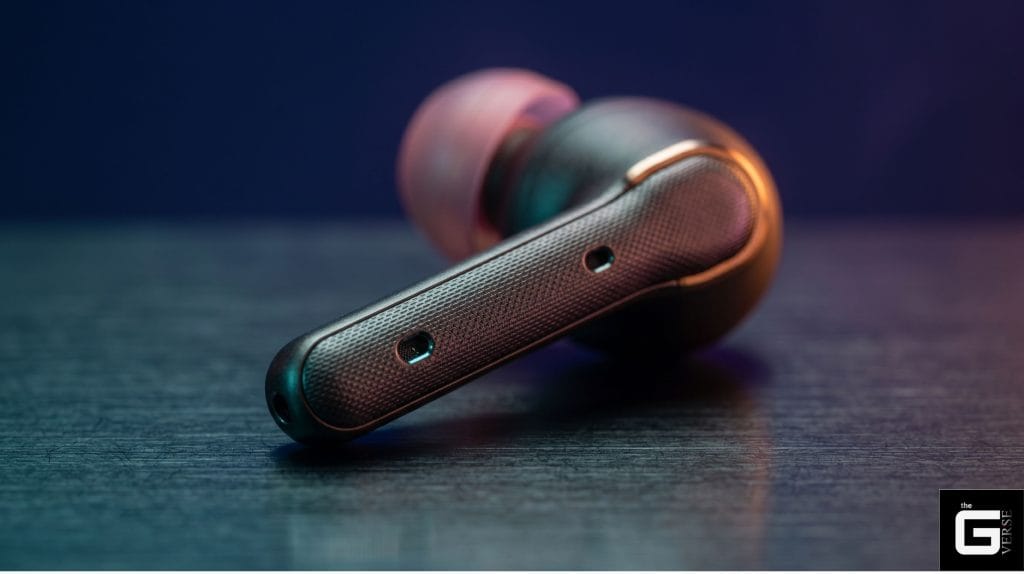
Rather than phase inversion, ENC relies on multi-microphone arrays and spatial filtering to isolate your voice from background noise. By placing two or more beamforming microphones at precise physical distances from one another, the processor can calculate exactly where a sound is originating.
Because the wearer’s mouth is closer to the primary microphone than the secondary reference microphone in these communication devices, the voice arrives at the primary sensor a fraction of a millisecond earlier. The DSP processes this Time-Difference-of-Arrival (TDOA) data to execute a technique known as delay-and-sum beamforming.
In practice, delay-and-sum beamforming aligns the phase of your voice across all microphones, while sounds coming from other directions stay out of phase and get filtered out.
- The primary directional headset microphones capture the full spectrum of the user’s voice mixed with ambient noise.
- The secondary reference microphone captures the ambient environmental noise primarily.
- The DSP mathematically subtracts the reference data from the primary feed, leaving only the localized voice signal intact.
This spatial filtering effectively creates a narrow acoustic “beam” pointed directly at the speaker’s mouth. Every time the number of microphones in the array is doubled, the mathematical signal-to-noise ratio (SNR) improves by exactly +3 dB, significantly enhancing vocal clarity.
Research Insight: According to acoustic imaging research utilizing Delay-and-Sum (DAS) beamforming, the baseline output is computed by coherently summing the delayed signals via the formula: SDAS = Σ (from i=1 to N) xi. Advanced 5th-order non-linear Delay-Multiply-and-Sum (DMAS) implementations can achieve dynamic range improvements of nearly 40 dB over traditional DAS, drastically suppressing off-axis artifacts.
Comparing ENC vs ANC: Which Technology Do You Need?
Most of the confusion comes from manufacturers packing both ANC and ENC into the same pair of earbuds without explaining what each one actually does. However, their specific utility maps to entirely different, mutually exclusive user scenarios.
Benchmark testing comparing remote call quality against jet engine cabin noise reduction reveals a strict functional divide. ANC is a noise cancellation technology that exists purely to protect the wearer’s focus and auditory comfort, while ENC exists solely to protect the clarity and professional transmission of the speaker.
The hardware comparison table at the top breaks down exactly how the ANC and ENC features diverge in practical applications.
ANC for the Listener: Immersion and Focus
ANC headphones have one goal: block out the world so you can focus on what you’re listening to. By actively reducing the environmental noise floor, ANC allows the wearer to perceive the full dynamic range of an audio track without requiring dangerous volume levels for noise-free listening.
At the top end, proprietary chips do the heavy lifting. Apple’s H2 processor currently demonstrates a formidable 89.4% noise reduction metric in heavy public transportation environments, effectively targeting the low-frequency rumble of airplane engines.
In direct comparison, the Sony WH-1000XM6, powered by the Integrated Processor V1, achieves a highly respectable 87% reduction. The reality of ANC earbuds processing is that these chips dedicate billions of calculations per second solely to measuring the latency between the outer ear cup and the inner ear canal.
ENC for the Microphone: Crystal Clear Calls
The raw mechanics of ENC noise cancellation dictate that the end-user never actually hears the technology functioning. The system exists entirely to scrub the outgoing audio feed before it transmits over cellular or VoIP networks.
A critical distinction must be established regarding audio processing latency. Dedicated ENC noise-canceling hardware chips execute spatial filtering in microseconds, ensuring real-time, lag-free voice transmission.
Software-based noise gates frequently utilized in PC streaming setups can introduce severe processing latency ranging from 1 to 3 seconds. Relying on silicon-level ENC guarantees that the speaker’s voice remains perfectly synchronized with their video feed during professional conference calls.
Advanced ANC Technology: Feed-forward, Feedback, and Hybrid
Beyond basic phase inversion, hardware manufacturers deploy three distinct circuit topologies to handle complex noise sources within the ANC circuitry. Understanding the different types of ANC requires analyzing exactly where the microphones are physically positioned in the headphone chassis.
- Feed-forward ANC: Places the microphone entirely on the external housing of the ear cup. This specific placement allows the DSP maximum time to process the incoming noise and generate the inverted anti-wave. Because the microphone cannot hear the final result inside the ear canal, it operates linearly. Feed-forward systems are highly effective at neutralizing higher frequencies in the 1-2 kHz range, but they are susceptible to wind noise clipping across the outer microphone housing.
- Feedback ANC: Places the microphone directly inside the ear cup, mere millimeters from the primary custom diaphragm speaker driver. This allows the system to monitor exactly what the human ear is hearing and correct any inversion errors in real-time. Because the microphone is positioned so close to the speaker, feedback loops suffer from severe physical limitations and cannot process frequencies above 800 Hz without risking a high-pitched feedback squeal.
- Hybrid ANC: Forcefully combines both feed-forward and feedback microphones into a single unified architecture. The external mic handles the 1-2 kHz midrange, while the internal mic attenuates the sub-800 Hz bass frequencies, resulting in the industry’s best noise-floor reduction.
Research Insight: According to technical whitepapers published by Poly and Sennheiser, feedback ANC architectures are fundamentally constrained by acoustic physics and cannot effectively mitigate noise above 800 Hz. To achieve broad-spectrum attenuation extending into the 1-2 kHz vocal range, hardware designers must implement a hybrid approach that incorporates feed-forward predictive modeling. Reference: [1]
The Role of the ENC Chip: Qualcomm cVc vs Budget Alternatives
The processing power of the embedded ENC chip dictates the ultimate success of outgoing voice isolation. The current manufacturing market is heavily divided between premium proprietary algorithms and budget-friendly silicon options.
Qualcomm’s cVc 8.0 (Clear Voice Capture) architecture represents the gold standard in AI-Powered ENC, supporting complex quad-mic ENC arrays and advanced AI algorithm integration for voice recognition and extraction. The cVc suite utilizes advanced non-linear echo cancellation and automatic gain control, continuously adapting to the speaker’s volatile environment.
Budget alternatives, predominantly manufactured by Realtek and BES, often rely on rudimentary dual-mic delay-and-sum arrays. While these cheaper noise-canceling tech chips successfully filter continuous background hums, they regularly fail to distinguish between the wearer’s voice and sudden, high-pitched transient noises like a barking dog.
| Specification | Qualcomm cVc 8.0 Suite | Budget Realtek/BES Implementations |
| Echo Cancellation | Advanced non-linear acoustic echo suppression | Basic linear feedback reduction |
| Microphone Support | Scales up to complex quad-mic beamforming arrays | Typically limited to simple dual-mic setups |
| Transient Handling | AI-driven differentiation of sharp, sudden noises | Often clips or passes sudden transient sounds |
| Power Efficiency | Highly optimized for sub-3µs latency micro-draw | Moderate power draw during heavy processing |
Form Factors: Over-Ear Headphones vs In-Ear Monitors (IEMs)
Physical hardware design governs acoustic performance just as strictly as the underlying code. The question of what ANC means for headphones changes dramatically when transitioning from heavy over-ear cups to lightweight, deep-insertion earplugs.
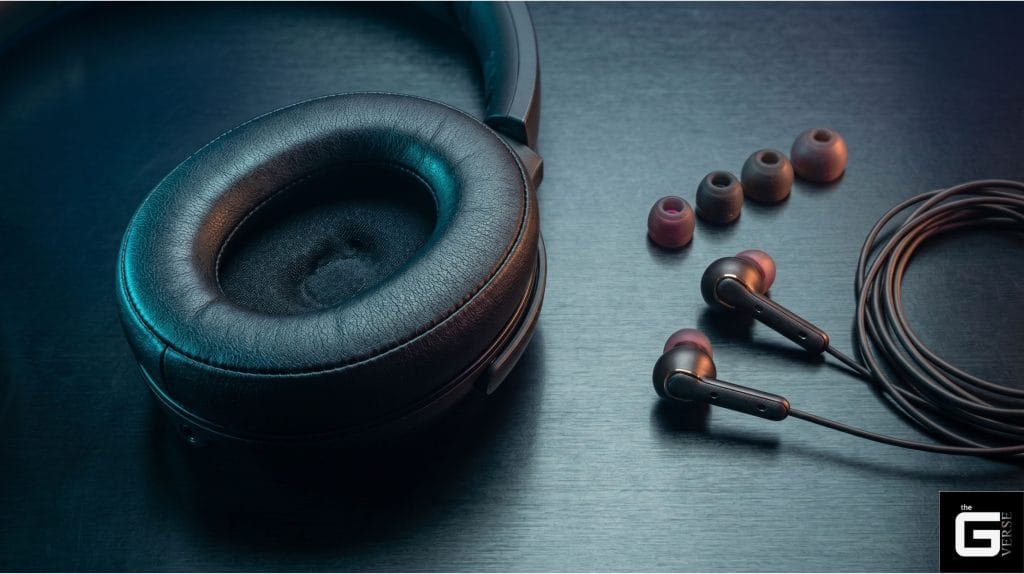
Over-ear headphones rely heavily on dense clamping force to provide a baseline of passive isolation against the skull. However, their large internal acoustic chambers require massive amounts of active anti-noise to achieve true silence.
Conversely, IEM noise canceling relies on the physical intrusion of the ear tip directly into the ear canal. When properly fitted with high-density polyurethane memory foam, IEMs physically plug the auditory pathway, blocking sound waves before they ever reach the eardrum.
Do IEMs Have ANC, and Do They Need It?
Among audiophiles, there’s an ongoing debate about whether IEMs even need ANC. For pure listening no calls, no commute noise the data suggests they largely don’t.
Laboratory testing using KEMAR HATS mannequins on wired IEMs from brands like Etymotic and Shure reveals that a perfect memory foam seal provides between 35 dB and 42 dB of passive sound isolation. This physical barrier filters high-frequency human chatter and office clatter far better than any DSP algorithm modifying the frequency response or artificially increasing Total Harmonic Distortion (THD).
While flagship wireless earbuds from Sony and Apple boast impressive ANC alongside Bluetooth multipoint connections, they still rely heavily on basic silicone tips that can leak acoustic energy. For users prioritizing absolute sound fidelity without the aggressive battery drain of active microprocessors, a budget-friendly IEM with memory foam tips will routinely outperform a premium ANC earbud in pure passive isolation.
What Others Get Wrong: Common Myths About Noise Cancelling
Marketing around ANC is notoriously vague. Most product pages skip the physics entirely, which leads to a handful of persistent myths that cost buyers money.
Myth 1: ANC Removes All Background Noise
The most persistent falsehood in the audio industry is that active circuitry creates a total vacuum of absolute silence. In practice, ANC strictly targets low, continuous frequencies like the hum of an airplane engine or the rumble of a train because those long wavelengths are mathematically predictable.
The DSP requires physical time to sample the noise, calculate the inverse wave, and drive the speaker. Sudden, high-pitched sounds like shouting voices, crying babies, or ambulance sirens change too rapidly for the processor to catch. Testing over-ear headphones in a coffee shop will always let the unpredictable clatter of ceramic mugs bleed through, while testing them in the predictable drone of a subway car yields near-perfect silence.
Myth 2: “Eardrum Suck” Damages Your Hearing
Many users complain of a painful vacuum sensation when activating premium noise-canceling headphones. The false perception of pressure caused by the sudden absence of low-frequency ambient noise frequently leads to unwarranted fears of physical eardrum damage.
This phenomenon is a heavily documented psychoacoustic barometric pressure illusion. The human brain utilizes low-frequency environmental noise to gauge spatial awareness. When ANC eliminates those specific low frequencies, the brain misinterprets the acoustic void as a rapid drop in cabin pressure—similar to ascending in an airplane. While uncomfortable, there is zero actual physical force being applied to the eardrum.
Myth 3: Noise Cancellation Doesn’t Affect Battery Life
Fast charge and USB-C capabilities are excellent additions, but hardware manufacturers routinely bury their battery drain statistics deep in the fine print. The reality is that generating continuous anti-noise requires significant electrical current to drive the amplifier and speaker diaphragms simultaneously.
Because the decibel scale is logarithmic, a 3 dB increase in ambient Sound Pressure Level (SPL) requires exactly double the amplifier power to synthesize the matching anti-noise. Laboratory testing of current-generation wireless earbuds reveals a strict 14% to 20% reduction in total battery capacity when ANC is engaged. If a commuter is attempting a long flight, relying purely on passive isolation is the best way to ensure the headphones survive the duration of the trip.
Research Insight: According to empirical battery discharge testing, the power consumption of an ANC circuit scales proportionally with the external environment; an ambient increase of 3 dB SPL mathematically forces the amplifier to draw double the electrical power to generate the necessary destructive interference. Leaving ANC engaged in highly volatile acoustic environments dramatically accelerates the depletion of the lithium-ion cell’s milliampere-hour (mAh) reserves. Reference: [1]
FAQ: ENC vs ANC — Top Questions Answered
What is ENC on headphones?
Environmental Noise Cancellation (ENC) is a dedicated microphone technology designed to filter out background noise from your transmitted voice. It ensures that the person you are calling hears your speech clearly, without the interference of traffic or wind noise.
What does ENC mean in earbuds?
In true wireless earbuds, ENC means the internal processor is using a multi-microphone array to execute delay-and-sum beamforming. This algorithm actively suppresses ambient sounds from entering your outgoing phone calls or gaming communications.
What does ANC stand for?
ANC stands for Active Noise Cancellation. It is an electro-acoustic hardware system that uses microphones to detect incoming environmental noise and generates a phase-inverted sound wave to cancel that noise before it reaches your eardrum.
What does ENC stand for?
ENC stands for Environmental Noise Cancellation. Unlike ANC, which protects the local wearer’s hearing, ENC protects the remote recipient’s communication clarity by scrubbing the outgoing audio signal of unwanted background clutter.
Can ANC and ENC work at the same time?
Yes. Premium wireless headsets run advanced dual-chip architectures that can simultaneously process incoming ambient noise with ANC for the wearer while isolating the outgoing voice using ENC for the caller on the other end.
The Honest Verdict: Which Acoustic Standard Reigns Supreme?
More chips don’t automatically mean better sound. The physics are pretty clear about what each technology can and can’t do. If the primary objective is shielding your ears from the droning roar of public transit, premium ANC hardware featuring hybrid feed-forward/feedback arrays is a mandatory investment.
However, if your daily workflow involves endless remote conferencing, chasing high ANC specs is a complete waste of capital. Robust ENC beamforming utilizing Qualcomm’s cVc 8.0 algorithms will single-handedly preserve your professional reputation on a noisy call.
Ultimately, the data dictates that users must match the technology to the specific acoustic vulnerability. A $300 pair of ANC headphones will not fix a poor Zoom microphone, and a pristine ENC gaming headset will not save a commuter from the droning exhaustion of a jet engine.