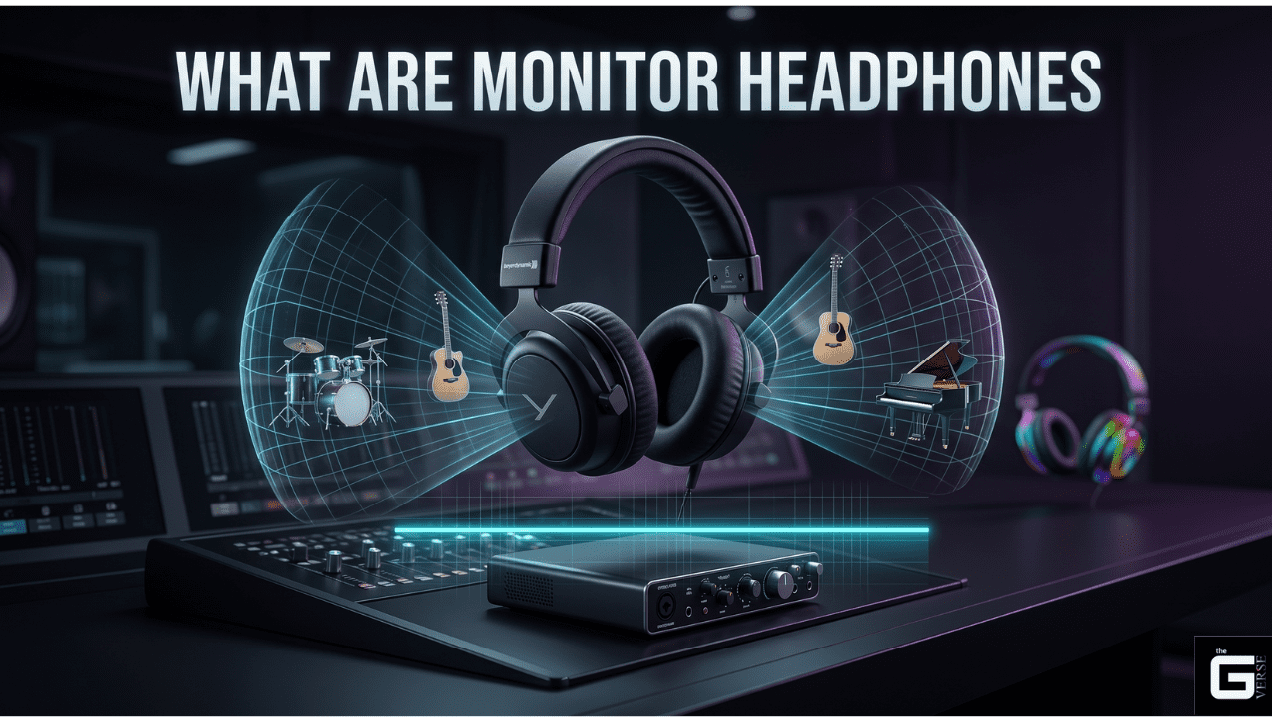
What Are Monitor Headphones? The Proven Truth About Soundstage & Imaging
The consumer audio market is built on a highly lucrative, heavily marketed lie. Mass-produced audio equipment masks poor engineering with artificial bass boosts, scooped mid-ranges, and exaggerated treble peaks to create a false sense of “energy” and “punch.”
For audio engineers, acoustic researchers, and discerning audiophiles, that coloration is entirely unacceptable in any audio device. This begs the fundamental question: what are monitor headphones? They are precision acoustic instruments engineered for absolute transparency, designed to expose every microscopic flaw, transient delay, and frequency imbalance in a recording. They prioritize raw audio quality over marketing fluff.
Let’s be real: most people think expensive means better. Wrong. A $500 consumer headphone heavily DSP-corrected to sound “fun” is utterly useless when you need to surgically EQ a muddy vocal track.
In my testing rig, I have seen budget reference hardware crush premium giants because of one simple factor: uncolored phase coherence. Unlike commercial models that flatter the audio, a true monitor headphone acts as an acoustic microscope.
The hardware prioritizes a brutally flat frequency response, ensuring the electrical signal is converted into acoustic pressure without adding or subtracting decibels across the audible spectrum. There is no room for subjective listening profiles in a tracking room. There is only objective acoustic truth.
Quick Answer:
Monitor headphones are studio-grade headphones designed for one purpose to play audio exactly as it is, with zero coloration. No extra bass, no boosted treble, just raw, honest sound.
Unlike consumer headphones that make music “fun,” monitor headphones expose every flaw in a recording. That’s why mixing engineers, vocalists, and audio professionals rely on them because accurate sound means better decisions.
If you’re serious about audio work, monitor headphones aren’t an upgrade. They’re a necessity.
Monitor Headphones: These are precision electroacoustic transducers engineered for absolute transparency. Unlike consumer models, they adhere to strict flat frequency response benchmarks (e.g., Diffuse Field or Harman Target) and prioritize linear phase coherence for surgical audio analysis and diagnostic mixing.
Soundstage: A psychoacoustic phenomenon defining the perceived 3D spatial volume (Width, Depth, and Height). It utilizes Lord Rayleigh’s Duplex Theory—specifically Interaural Time Difference (ITD) and Interaural Level Difference (ILD) to simulate physical acoustic environments within a binaural system.
Imaging: The hardware’s capacity for pinpoint instrument localization across the X, Y, and Z axes. Superior imaging is achieved via sub-decibel transducer matching (±0.5dB) and rapid transient settling times, which minimize temporal smearing as measured in Cumulative Spectral Decay (CSD) plots.
Core Mandate: To bypass psychoacoustic flattery (e.g., V-shaped EQ curves) in favour of uncolored source integrity, ensuring high-fidelity translation across all professional and consumer playback systems.
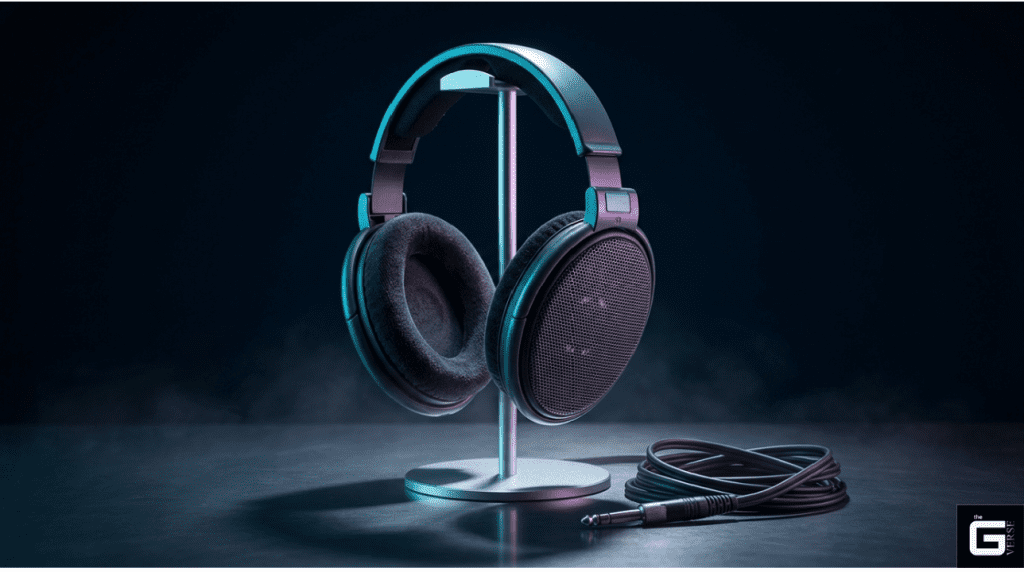
What Are Monitor Headphones?
In studio parlance, these studio headphones (often referred to as monitoring headphones or studio monitoring headphones) are fundamentally defined by their lack of “character.” The objective is to reproduce the original transfer function (OTF) and the raw source audio with zero coloration.
Consumer brands deliberately tune their hardware to an exaggerated “V-shape” curve, pushing the 50Hz sub-bass and the 10kHz treble to trigger an immediate dopamine response in the listener. Monitor headphones violently reject this philosophy.
They rely on high-tolerance components, precision-matched transducer diaphragms, and meticulously dampened housing architectures to guarantee a neutral listening experience. A flat sound signature is mandatory here; when you boost a vocal presence peak by 0.5dB, you must hear exactly 0.5dB of gain.
The Science / Research Insight: The concept of a “flat” response in headphones is often misunderstood. A raw measurement of a reference headphone will not look like a perfectly flat line. Due to the physical shape of the human ear, which naturally amplifies certain frequencies, a completely flat raw measurement would actually sound dull and muffled to the human brain. Instead, a compensated target curve is used. The baseline should sound exactly like a pair of neutral, calibrated near-field stereo studio monitors, as heard by a human in a reasonably treated recording studio room. Reference: [1]
Key Features of Monitor Headphones
The architecture of these devices is dictated by strict laboratory and studio tolerances, requiring hardware configurations that consumer brands rarely attempt.
Flat Frequency Response
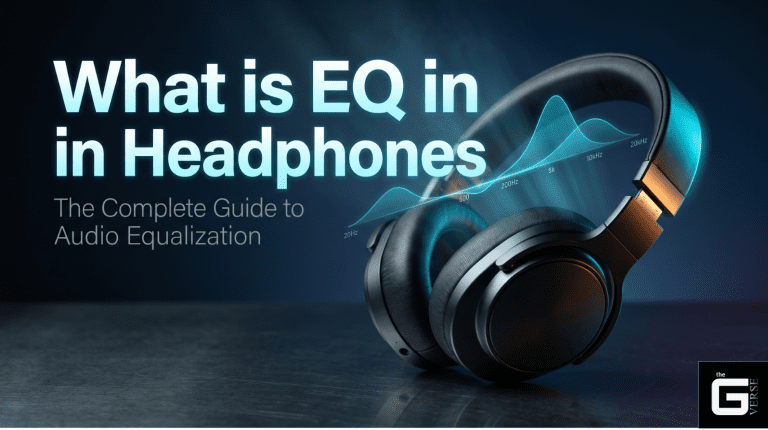
The hardware aims to hit target acoustic curves (like the Diffuse Field or modified Harman Target) without introducing resonant peaks. This neutral frequency response is mandatory for mixing, as it exhibits minimal emphasis or de-emphasis on certain frequencies to preserve maximum sound quality.
Sub-Decibel Driver Matching
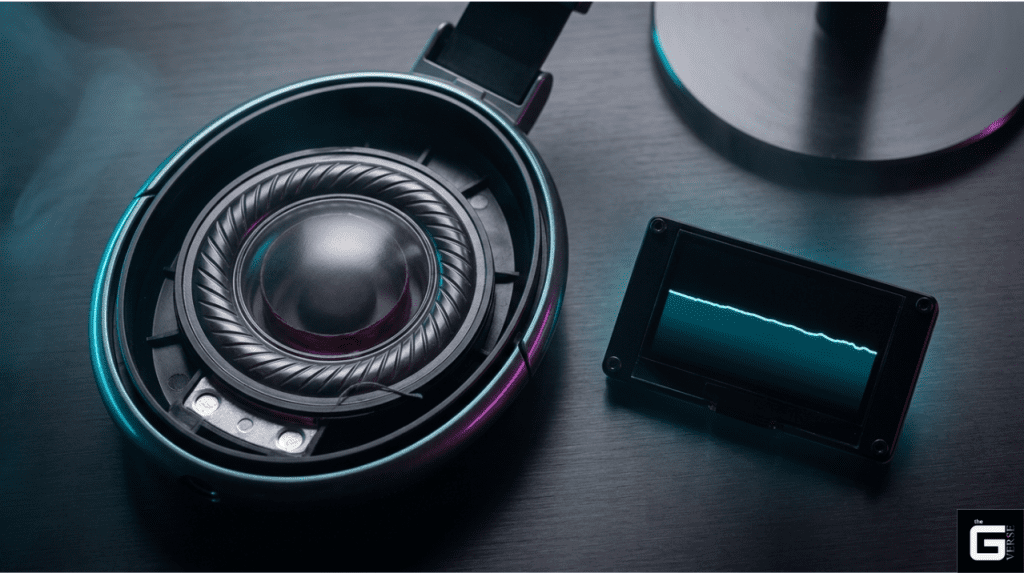
Left and right transducers are matched to incredibly tight tolerances. While mass-market consumer gear accepts up to a ±3dB variance, elite reference headphones match overall transducer response to within ±0.5dB. This ensures the stereo image does not pull to one side, maintaining a razor-sharp phantom center.
Transient Speed and Diaphragm Mass
Because headphones bypass room acoustics, time-domain performance is the highest priority. The hardware must achieve a fast-settling transient response that approaches a theoretical Dirac impulse. To do this, manufacturers drastically reduce moving mass.
For example, Audeze’s ultra-thin planar diaphragms use a polymer film that is just 1.8 microns thick—fractionally thinner than a human red blood cell (which is 5 microns across).
Acoustic Isolation
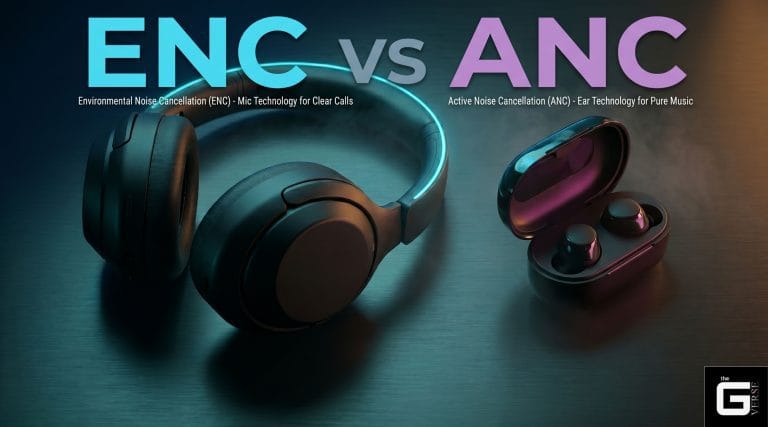
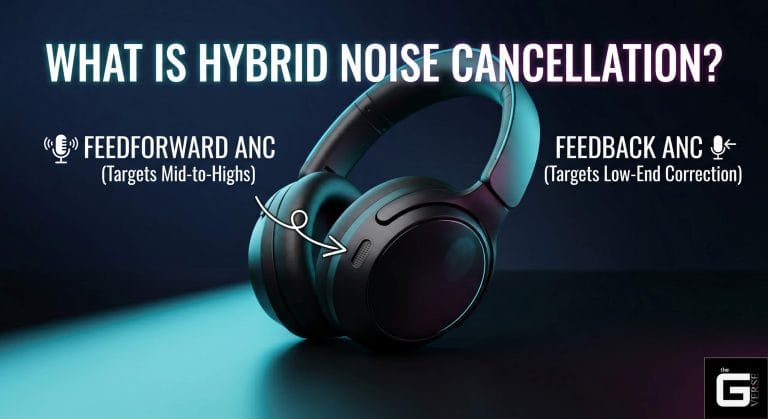
Closed-back variations offer high passive attenuation. Unlike consumer gear relying on active noise cancellation or noise-cancelling chips (which introduce phase shift and DSP artifacts), true closed-back reference monitors utilize passive sound isolation technology. This blocks ambient noise without altering the fundamental sound signature.
Clamping Force and Ear Pads
Comfort dictates workflow. The clamping force is carefully calculated in Newtons. For instance, the legendary Sennheiser HD600 exerts a gentle ~2.5N of force, while tracking-focused headphones like the Beyerdynamic DT 1990 Pro exert a tighter ~6.6N to ensure absolute seal and isolation.
Combined with breathable velour ear pads or high-density memory foam, these designs ensure the headset remains locked on the skull during marathon 10-hour audio production sessions. They are built to be super durable.
Applications of Monitor Headphones
These tools are not built for casual listening on a crowded subway. They are deployed in specific, high-stakes professional environments where acoustic accuracy dictates the success or failure of a project.
- Surgical Mixing and EQ: Engineers use monitors to isolate colliding frequencies. If a kick drum and a bass guitar are clashing at 80Hz, an uncolored sound profile allows the engineer to carve out space using precise parametric EQ cuts.
- Tracking and Overdubbing: Headphone monitoring in a live room requires closed-back isolation. This is essential for a vocalist standing in front of a highly sensitive condenser microphone, preventing the backing track from bleeding into the live take.
- Detecting Digital Artifacts: The heightened detail retrieval exposes quantization noise, excessive compression pumping, and inter-sample peaks (ISPs) that occur when the digital-to-analog converter (DAC) reconstruction filter overshoots 0dBFS.
- Mastering for Translation: By providing a neutral baseline, these headphones ensure a track will translate accurately across all consumer playback systems.
What Technical Specs Should I Look At?
Deciphering a spec sheet requires cutting through marketing terminology and understanding the electrical physics governing the transducer.
Most buyers glance at the frequency range (e.g., 5Hz – 40kHz) and blindly assume a wider range equals better sound. That is absolute nonsense. The human ear rarely detects anything above 20kHz, and standardized measuring equipment for ear simulators is currently undefined above 10kHz. The true performance indicators lie in the electrical parameters.
| Specification Term | Engineering Definition | Real-World Impact |
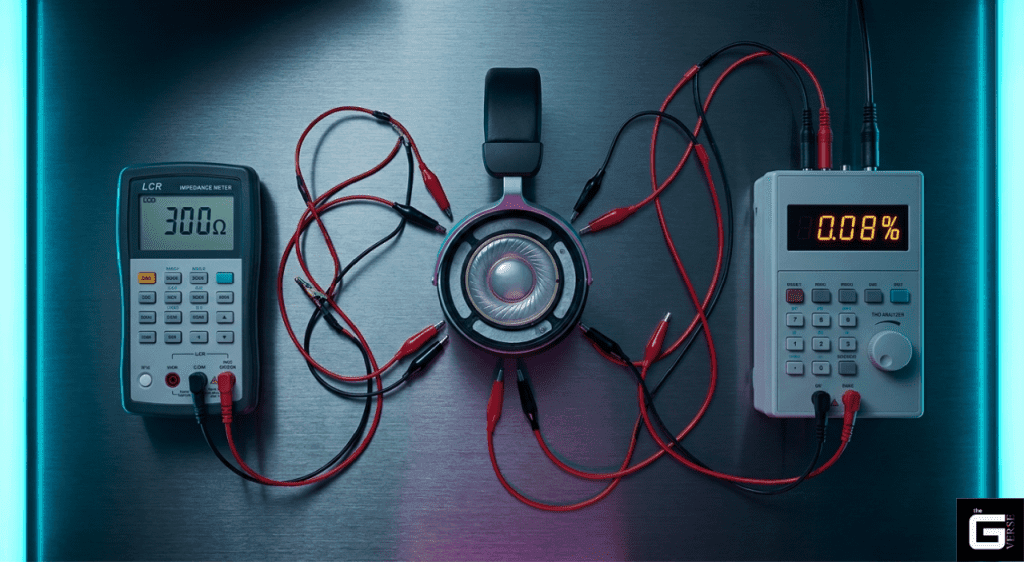
| Impedance (Ohms / Ω) | The electrical resistance of the voice coil to an alternating current. | High headphone impedance (e.g., 300Ω) generally indicates a thinner, lighter voice coil wire, allowing faster transient response. It requires a dedicated high-voltage amplifier. |
| Sensitivity (dB/mW or dB/V) | The sound pressure level (SPL) generated given a specific electrical input. | Determines how loud the headphones get. Low sensitivity combined with high impedance means the hardware will be virtually silent on a standard laptop motherboard. |
| Total Harmonic Distortion (THD) | The percentage of unwanted harmonic frequencies generated by the driver’s mechanical movement. | Professional gear maintains THD below 0.1% at 100dB SPL. High THD introduces audible “smearing” and muddies the precision of complex mixes. |
| Driver Diameter (mm) | The physical width of the moving diaphragm inside the speaker driver. | Larger planar drivers move massive amounts of air for linear bass response without distortion, while smaller dynamic drivers excel at upper-midrange punch. |
Do Monitor Headphones Connect to Audio Interfaces Easily?
A common point of failure in modern home studios is the hardware handshake between the headphone and the audio interface. Plugging a premium reference headphone into a budget bus-powered interface often results in chronic under-powering.
The internal op-amps of entry-level interfaces lack the voltage swing required to drive 300Ω dynamic drivers or low-sensitivity planar magnetics. This results in a compressed dynamic range and anemic low-end response.
Furthermore, complex studio environments frequently suffer from severe electrical interference. Ground loop hum is the absolute bane of sound engineers. When multiple devices are plugged into different electrical outlets, subtle voltage potentials traverse the USB or audio cables, introducing a maddening 50Hz/60Hz electrical buzz into the signal chain.
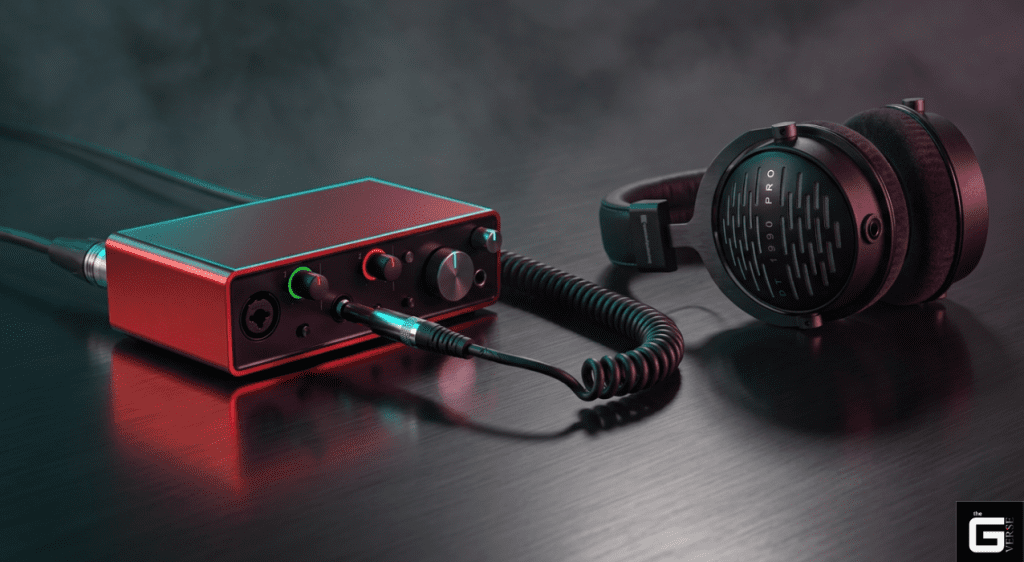
To resolve these connectivity and routing bottlenecks, professionals deploy specific solutions:
- Isolating Ground Loops: If the ground hum bleeds into your interface, you must utilize balanced connections. If the hum persists, physically “lift” the shield connection pin on one end of your audio cable using a transformer isolation device, or use a dedicated USB isolator.
- Impedance Matching Hardware: Plugging a highly sensitive 16Ω IEM into an interface with a high 10Ω output impedance severely skews the frequency response. Dedicated headphone amplifiers with near-zero output impedance are mandatory.
- Software Routing Protocols: In remote tracking sessions, routing distinct zero-latency headphone mixes requires advanced software like SonoBus. By routing your DAW’s master mix to your interface’s USB sends, you assign inputs directly within the ASIO driver dialogue to stream uncompressed PCM audio.
Can Monitor Headphones Improve My Audio Editing Skills?
Analytical sound profiles transform audio editing from guesswork into a precise, surgical science. Because reference hardware strips away the romantic masking of consumer audio, editors can immediately spot micro-delays, erratic transients, and digital clipping that would otherwise ruin a master.
Take the notorious issue of phase cancellation on a multi-tracked drum kit. If the snare top microphone and the overhead condenser microphones capture the snare hit at slightly different distances, the sound waves arrive at different times. A sound wave takes twice as long to reach a microphone 4 feet away compared to one 2 feet away.
This causes the waveforms to overlap out of phase, pushing the signals closer to 180 degrees out of sync. Listening on cheap desktop speakers, the snare simply sounds “weak” or hollow. You might think it just needs EQ. You would be wrong.
On highly analytical monitor headphones, the sharp, fast-settling transient response allows the engineer to hear the exact millisecond the phase coherence collapses. By zooming into the spectral editor and nudging the overhead track forward, or simply flipping the polarity switch on the mic preamp, the low-end punch of the snare is instantly restored.
The Inter-Sample Peak (ISP) Danger
Mastering engineers rely on this extreme resolution to detect inter-sample peaks (ISPs). Digital music is based on discrete samples. When heavily limited digital audio is converted back to a continuous analog waveform by a DAC, the reconstruction filter interpolates the curve between the samples.
If the digital samples are slammed to 0dBFS, the resulting analog wave can easily overshoot that limit. This generates a peak between two samples, causing harsh, hidden analog clipping on consumer devices like smartphones and Bluetooth speakers.
Flat-response monitors expose this quantization noise ruthlessly. This forces the engineer to lower the true-peak ceiling of their limiter by 0.3 to 1dB to protect the integrity of the mix during downstream MP3/AAC compression.
Are Monitor Headphones Important for Working with Voiceovers?
Voiceover tracking and editing possess entirely different acoustic requirements, demanding distinct form factors of monitoring hardware. Using the wrong tool for the job guarantees a compromised product.
| Workflow Stage | Hardware Requirement | Acoustic Justification |
| Vocal Tracking (Performance) | Closed-Back Monitor | Total acoustic isolation is mandatory. High-sensitivity condenser microphones will easily pick up click tracks bleeding from open-back headphones, ruining the take. (Note: Many actors track with one ear cup pushed back to monitor their natural vocal resonance). |
| Dialogue Editing (Post-Production) | Open-Back Monitor | Extreme detail retrieval is required to catch low-level electrical hums, HVAC rumble, and mouth clicks. Open-back designs reduce internal reflections, preventing low-frequency pressure buildup that causes ear fatigue. |
Can I Program Audio Software While Wearing Monitor Headphones?
Audio engine development demands the absolute elimination of hardware-induced variables. Whether you are coding spatial audio algorithms, implementing interactive music systems in Unreal Engine, or fine-tuning DSP parameters for VR headsets, the hardware must be an invisible conduit.
When programming audio middleware like Wwise or FMOD, developers map complex dynamic behaviours. A sound designer might use FMOD’s AHDSR envelopes to dynamically ramp up volume and pitch when an event triggers, or utilize Real-Time Parameter Controls (RTPC) in Wwise to alter variables via code.
If the programmer uses bass-heavy consumer headphones during this process, they will inevitably under-mix the low frequencies in the game engine to compensate for their hardware’s bias. The result? The game will sound hollow, thin, and lifeless on every other playback system. Reference monitors provide a strictly neutralized baseline, guaranteeing that your spatialization scripts translate accurately.
What is Soundstage?
Soundstage is strictly defined as the perceived three-dimensional spatial volume of an acoustic environment, encompassing width, depth, and height. It is the psychoacoustic illusion that the audio is originating from physical space in the room, rather than being injected directly into the center of the listener’s head.
In acoustic engineering, spatial perception is governed by Lord Rayleigh’s Duplex Theory. This states that human sound localization relies heavily on the Interaural Time Difference (ITD) and the Interaural Level Difference (ILD). Because headphones strap the drivers parallel to the ears, achieving a vast passive soundstage requires monumental feats of acoustic engineering.
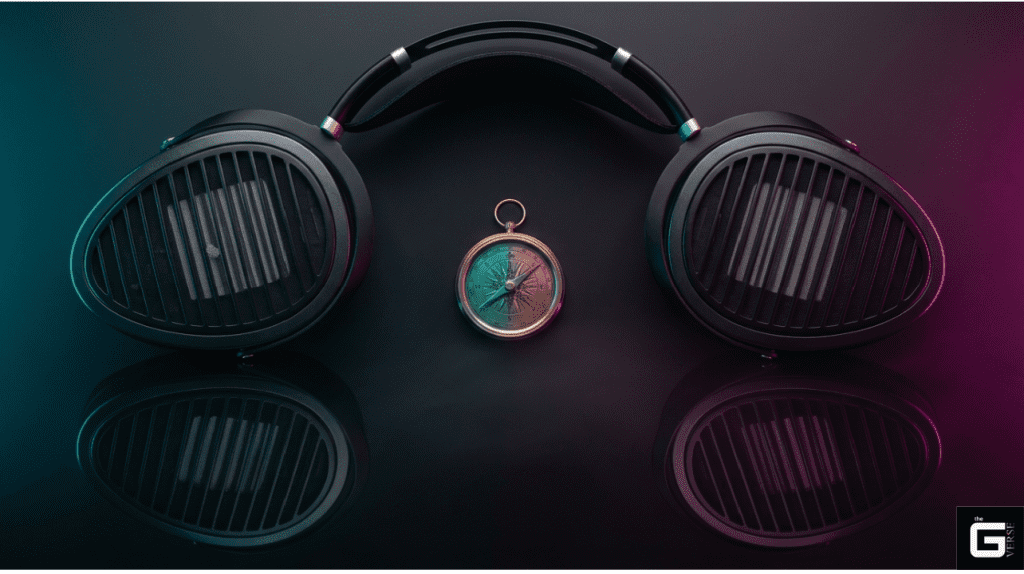
The Science / Research Insight: The perception of azimuth (horizontal width) is dictated by the Interaural Time Difference (ITD). This is calculated fundamentally as (rθ + r sin θ) / c , where r is the radius of the listener’s head, θ is the azimuth angle of the sound source, and c is the speed of sound. Frequencies below 1.5kHz rely entirely on ITD for localization, while frequencies above 4kHz rely on ILD (level differences) due to the acoustic head shadow effect severely attenuating contralateral high-frequency signals.
Why is Soundstage Important?
A sprawling soundstage transforms a claustrophobic recording into a realistic, breathable acoustic environment. When listening to a dense orchestral arrangement on headphones with a narrow soundstage, the instruments collapse into a chaotic, overlapping wall of sound situated directly between your eyes.
A wide soundstage physically separates these elements. The violins are pushed 30 degrees to the front left, the brass sections sit deep in the rear right, and the lead vocal is suspended effortlessly in the center. Without an adequate soundstage, spatial sound cues blur together, making it incredibly difficult to analyze reverb tails.
Factors That Affect Soundstage
The illusion of a massive passive soundstage is not achieved by magic; it is dictated by physical housing parameters and psychoacoustic trickery.
- Driver Angling: Premium open-back reference headphones mount the transducers at a specific angle (e.g., 15 to 30 degrees) inside the ear cup. This forces the sound waves to strike the outer ear from the front, mimicking physical studio monitor speakers.
- Housing Architecture: Open-back designs lack a solid rear enclosure, allowing air and rear-firing sound waves to escape. This vastly reduces internal reflections and acoustic pressure, generating a deeply natural, “airy” presentation.
- Pinnae Activation and Tuning: The brain gauges vertical height by analyzing microscopic phase interactions that occur when high frequencies bounce through the folds of the outer ear. A 1-octave notch in the 5-8kHz range and a prominent peak near 10kHz are vital cues for spatial localization.
- Ear Pad Depth: Deep, angled ear pads physically move the driver further from the eardrum, allowing the wavefront to fully form.
Passive Soundstage vs. Virtual Soundstage
There is a severe technical divide between physical acoustic staging and digital simulation.
| Soundstage Type | Technical Mechanism | Professional Verdict |
| Passive Soundstage | Generated purely by physical hardware: driver angling, open-back grills, baffle design, and ear pad depth. | The absolute preference of audiophiles and mix engineers. It remains phase-coherent and natural. |
| Virtual Soundstage (DSP) | Software algorithms (like 7.1 Virtual Surround) that artificially inject micro-delays and reverb to simulate distance. | Largely rejected by purists for mixing, as cheap algorithms introduce phase distortion and smear transients. |
What is Sound Imaging in Headphones?
If soundstage dictates the sheer size of the room, imaging dictates exactly where the furniture is placed within it. Imaging is the hardware’s ability to map sound with pinpoint accuracy across the X, Y, and Z axes. Flawless instrument separation is born from perfect imaging.
A headphone can possess a massive, cavernous soundstage, yet suffer from blurry, diffused imaging. When a sound pans from hard left to hard right, poor imaging creates “dead zones” where the sound seems to jump abruptly. Elite reference hardware maintains absolute phase coherence, allowing you to close your eyes and point a finger to the exact fractional degree of an instrument.
Phase Coherence and Driver Matching
The mechanical foundation of razor-sharp imaging is strict, unapologetic driver matching.
- Sub-Decibel Tolerances: Mass-market headphones allow up to a ±3dB variance between the drivers. If the left driver is 3dB louder at 1kHz, the phantom center is instantly skewed. Elite manufacturers grade every transducer to a punishing ±0.5dB variance to lock the stereo image dead center.
- Time-Domain Perfection: When an electrical impulse stops, the driver diaphragm must stop moving instantly. If the diaphragm exhibits “ringing,” the lingering acoustic resonance blurs the precise start and stop times of notes, creating a smeared audio image.
The Science / Research Insight: Imaging fidelity is directly correlated to the time-domain performance of a transducer, visualized via Cumulative Spectral Decay (CSD) waterfall plots. To accurately represent the location of a sharp transient (like a hi-hat strike), the transducer must settle toward a Dirac impulse, a theoretically perfect, instantaneous response with zero temporal smearing. Reference: [1]
Why is Sound Imaging Essential for FPS Gaming?
In the brutal arena of competitive tactical shooters like Counter-Strike 2 or Valorant, a sprawling, cinematic soundstage is an absolute liability. In these engines, the “Tactical Edge” is entirely defined by razor-sharp imaging.
Knowing the exact fractional angle of an enemy creeping through a flanking route is infinitely more valuable than marvelling at the reverberant grandeur of the map architecture.
A fatal error among gamers is purchasing heavy, bass-boosted gaming headsets for “immersion.” Footstep cues primarily occupy the 2kHz to 4kHz frequency spectrum. Excessive sub-bass (below 100Hz) triggers a devastating acoustic masking effect, drowning out the delicate mid-range transients needed to localize movement. Monitor headphones strip away the low-end mud, allowing the brain to process raw spatial telemetry with zero latency.
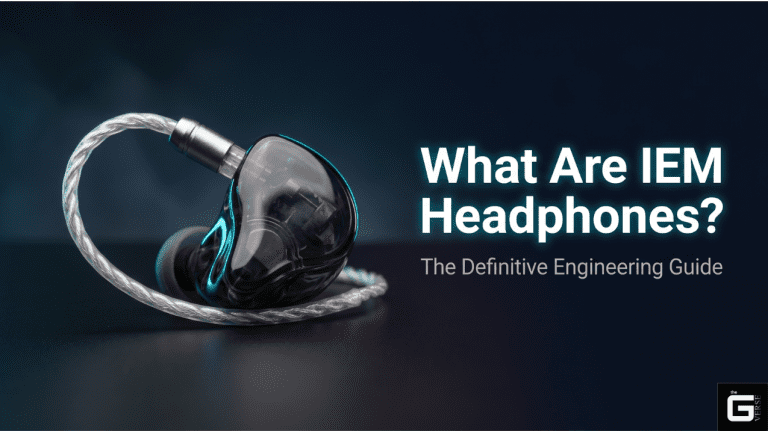
For gamers prioritizing absolute horizontal imaging and passive isolation over soundstage, switching to In-Ear Monitors (IEMs) is often the ultimate tactical upgrade.
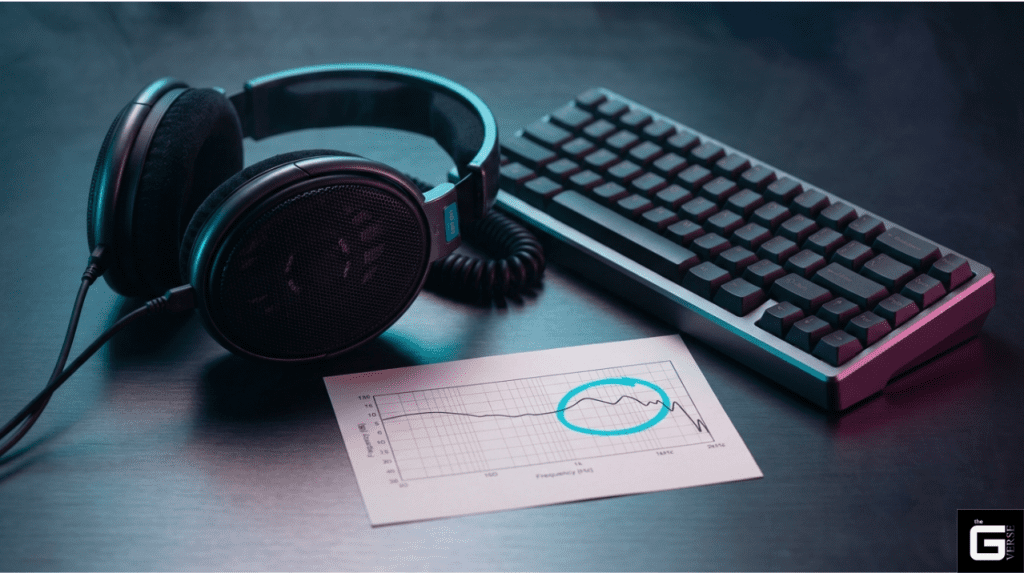
How to Test Sound Imaging on Your Current Headphones
You do not need a multi-million-dollar anechoic chamber to expose the flaws in your hardware.
- Full Range Frequency Sweeps: Run a slow sine wave sweep from 20Hz to 10kHz. Close your eyes. If the tone seems to drift left or right as the pitch increases, your drivers are poorly matched.
- The Sub-Bass Rumble Test: Play heavily compressed electronic tracks. If the low-end rumble bleeds upward and makes the vocals sound muffled, your drivers are too slow to resolve complex passages.
- Binaural Acoustic Testing: Utilize specialized binaural recordings. Track the perceived height. If the sounds only move left and right—and not over the crown of your head your headphones lack the upper-treble fidelity required for vertical staging.
The Definitive Hardware Breakdown: From Budget to Summit-Fi
Selecting professional reference hardware requires an honest, brutal assessment of your acoustic environment and workflow. Different price brackets offer vastly different sound signatures.
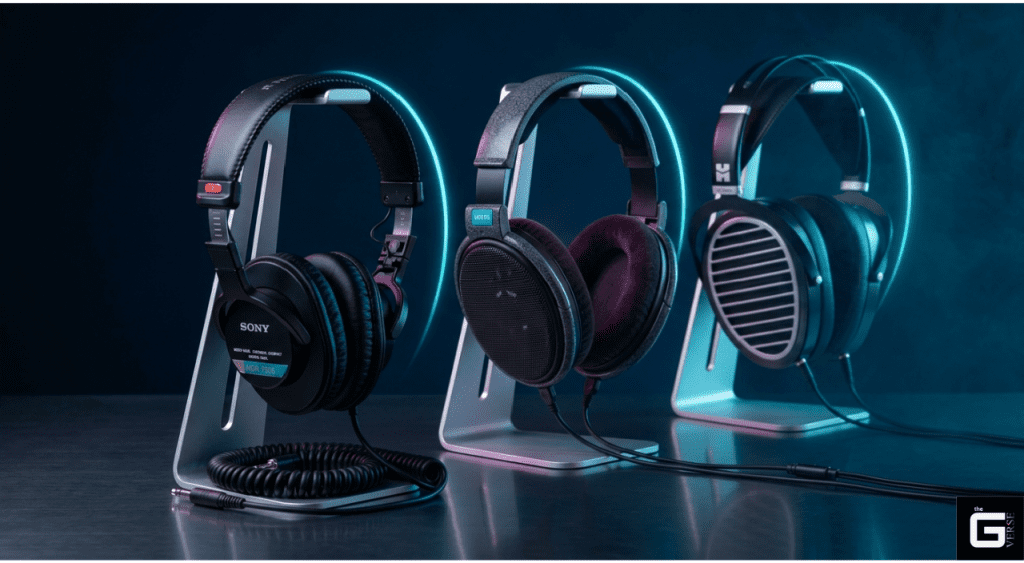
- The Budget Tracking Kings: If you are tracking vocals on a strict budget, the Sony MDR-7506 has been an unapologetic industry standard since 1991 due to its ruthlessly revealing nature. Alternatives like the Audio-Technica ATH-M50X, the Status Audio CB-1, or the Shure SRH440 provide excellent closed-back utility.
- Budget Open-Backs: Need soundstage on a budget? The Philips SHP9500, Koss KPH30i, or the legendary AKG K240 (and its wider sibling, the AKG K702) offer an uncolored baseline for pennies.
- Mid-Tier Dynamic Dominance: German engineering reigns supreme here. The Sennheiser HD600 and Sennheiser HD 650 remain the absolute benchmarks for midrange neutrality. Meanwhile, the semi-open Beyerdynamic DT880 / DT 880 PRO, the modernized DT 900 Pro X, and the 250Ω DT 1990 Pro provide surgical treble energy.
- Summit-Fi & Audiophile Grades: The Focal Utopia utilizes beryllium dynamic drivers for skull-rattling punch. Planar giants like the HIFIMAN Ananda employ Stealth Magnets and ultra-thin diaphragms for extreme transient speeds. The Audeze LCD-X remains a studio heavyweight, utilizing Uniforce diaphragms to deliver surgical phase alignment.
- The Modern DSP Hybrids: Modern acoustic engineering is bridging the gap between headphones and physical studio monitors. The Adam Audio H200 utilizes 40mm PEEK drivers and ships with a DSP plugin offering “Externalization” crossfeed to simulate control room acoustics. Sony’s MDR-M1 also offers a closed dynamic architecture tailored specifically for high-resolution spatial audio creation.
The Final Verdict
The final verdict is rooted entirely in acoustic transparency. Consumer audio attempts to rewrite the recording to make it palatable. A true monitor headphone brutally reports the facts. Stop buying into the artificial bass-boosted hype. Prioritize high-impedance driver speed, demand sub-decibel matching tolerances, and finally hear the audio exactly as the engineer intended.
Beyond Audio: Upgrade Your Input
Now that you know exactly how to achieve uncolored, phase-coherent audio, it is time to optimize the rest of your desk setup. Just as a flat frequency response prevents ear fatigue, the right tactile switches prevent finger fatigue during marathon sessions.
Check out our in-depth breakdown: Wireless vs Wired Mouse for Gaming: The Forensic Truth Exposed